Oporto Accounting Joins INOVAGAIA’s One Stop Shop Workshop on Starting a Business in Portugal

[et_pb_section fb_built=”1″ _builder_version=”4.16″ global_colors_info=”{}”][et_pb_row _builder_version=”4.16″ background_size=”initial” background_position=”top_left” background_repeat=”repeat” global_colors_info=”{}”][et_pb_column type=”4_4″ _builder_version=”4.16″ custom_padding=”|||” global_colors_info=”{}” custom_padding__hover=”|||”][et_pb_text _builder_version=”4.27.4″ text_font=”Radikal|300|||||||” text_line_height=”1.9em” header_2_font=”Radikal||||||||” background_size=”initial” background_position=”top_left” background_repeat=”repeat” hover_enabled=”0″ inline_fonts=”Radikal” global_colors_info=”{}” sticky_enabled=”0″]

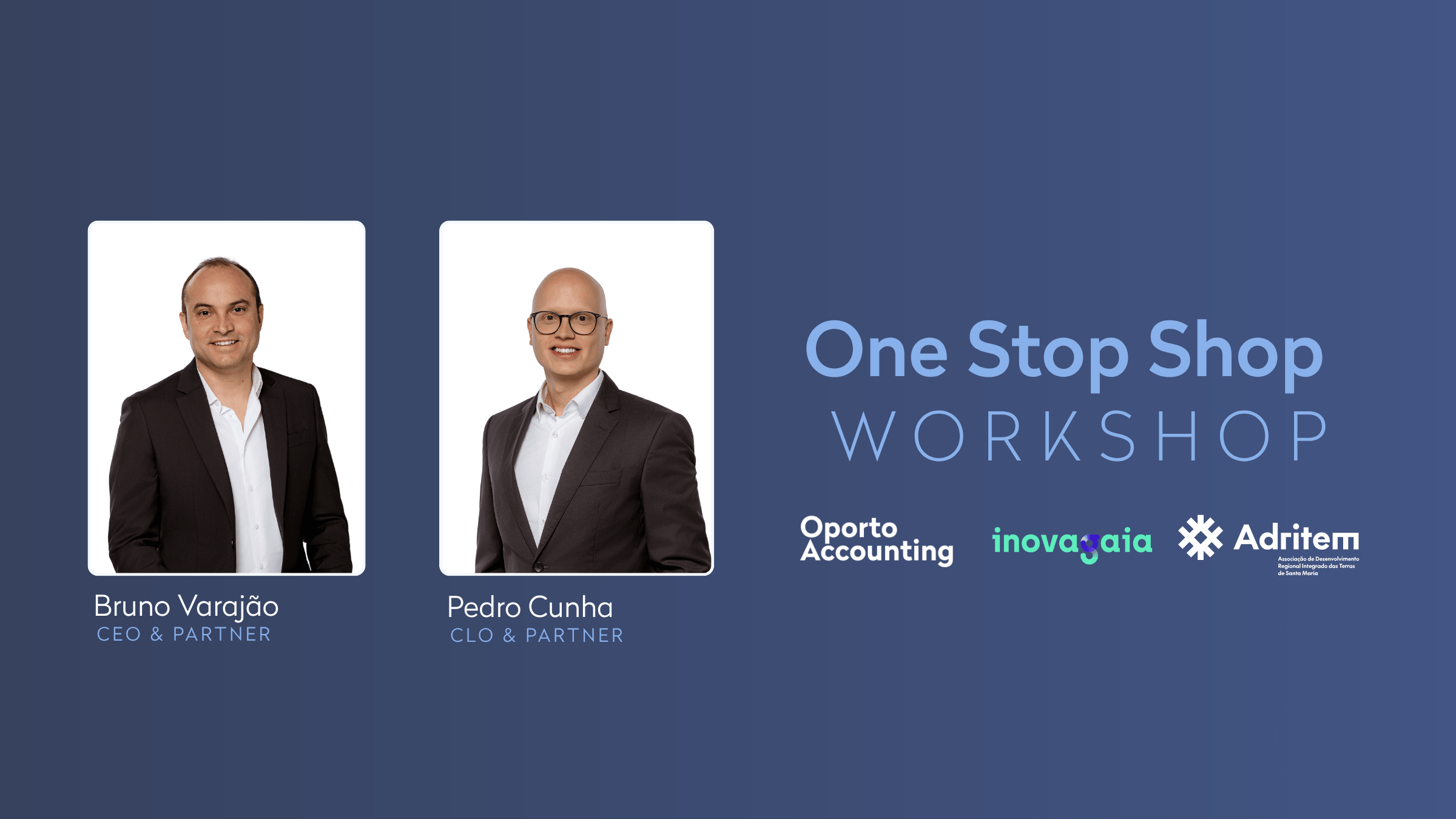
Oporto Accounting was pleased to take part in the One Stop Shop Workshop, an initiative designed to support immigrant entrepreneurs and individuals interested in starting a business in Portugal. The workshop was organised by our long-standing partner INOVAGAIA, in collaboration with ADRITEM – Associação de Desenvolvimento Regional Integrado das Terras de Santa Maria, as part of the Centraliza + One Stop Shop project, with the support of Montepio and other strategic partners.

The One Stop Shop initiative promotes the economic and social inclusion of immigrants across Northern Portugal by bringing together access to entrepreneurship support, financial literacy, mentoring, training and business development services.

Oporto Accounting’s CEO, Bruno Varajão, and Chief Legal Officer, Pedro Mendes da Cunha, shared practical insights into the key legal, tax and accounting considerations for anyone planning to start a business in Portugal. The session covered how to choose the most suitable legal structure and register a business or self-employed activity, including the main requirements, registration process, expected costs and the practical differences between the available legal frameworks.

We also explored Portugal’s tax system and the ongoing accounting and tax obligations that entrepreneurs face, including key taxes, reporting requirements, important deadlines, and best practices to help businesses remain compliant from day one. Throughout the session, our aim was to provide clear, practical insights that participants could confidently apply as they begin and grow their entrepreneurial journey in Portugal.


Our goal was to help participants gain a clear and practical understanding of the legal and tax aspects of entrepreneurship, giving them greater confidence to start and grow their businesses in Portugal.

At Oporto Accounting, we are proud to support initiatives that promote financial literacy, entrepreneurship and the sustainable development of local communities. We believe that sharing knowledge is one of the best ways to help build a stronger, more inclusive and resilient economy.

For further clarification on company setup or accounting in Portugal, you can reach out through our contact page.

[/et_pb_text][/et_pb_column][/et_pb_row][/et_pb_section]

Porto Startup Ecosystem Strengthens Its European Position

[et_pb_section fb_built=”1″ _builder_version=”4.16″ global_colors_info=”{}”][et_pb_row _builder_version=”4.16″ background_size=”initial” background_position=”top_left” background_repeat=”repeat” global_colors_info=”{}”][et_pb_column type=”4_4″ _builder_version=”4.16″ custom_padding=”|||” global_colors_info=”{}” custom_padding__hover=”|||”][et_pb_text _builder_version=”4.27.4″ text_font=”Radikal|300|||||||” header_2_font=”Radikal||||||||” background_size=”initial” background_position=”top_left” background_repeat=”repeat” hover_enabled=”0″ inline_fonts=”Radikal” global_colors_info=”{}” text_line_height=”1.9em” sticky_enabled=”0″]

Porto’s rise as an international business destination has been building for years. What was once recognised primarily for its industrial heritage and quality of life is now gaining increasing attention as one of Europe’s most attractive cities for startups, technology companies, and international investment.

The latest Global Startup Ecosystem Report 2026 (GSER) recognises Porto as one of the world’s fastest-growing emerging startup ecosystems. This reflects the city’s ability to create the conditions that innovative businesses need to launch, scale, and succeed.

This progress is the result of long-term collaboration between universities, research centres, public institutions, investors, accelerators, and the private sector. Together, they have transformed Porto into an increasingly competitive location for companies looking to establish a presence in Europe.

For international entrepreneurs, Porto offers much more than a dynamic startup community. The city combines access to highly qualified talent, competitive operating costs, modern infrastructure, and direct access to the European Single Market. At the same time, Northern Portugal continues to strengthen its role as one of the country’s main economic engines, offering opportunities across technology, manufacturing, life sciences, renewable energy, and other high-value industries.

This balanced and sustainable approach is one of Porto’s greatest strengths. The city has focused on building an ecosystem capable of supporting businesses throughout every stage of their development, from innovative startups to international companies establishing subsidiaries, branches, or regional operations in Portugal.


Financial Stability Reinforces Investor Confidence

A strong business ecosystem also depends on long-term confidence.
Alongside its growing international recognition, Porto continues to demonstrate solid financial fundamentals that support sustainable economic development.

In June 2026, Fitch Ratings affirmed the City of Porto’s ‘A’ Long-Term Issuer Default Rating with a Positive Outlook, recognising the municipality’s prudent financial management, strong operating performance, and sustainable debt profile.

For investors and business leaders, this is a signal that Porto offers a stable and well-managed environment in which businesses can invest with confidence.

As more businesses look beyond Europe’s largest capitals for growth opportunities, Porto continues to stand out for the qualities that matter most: innovation, talent, stability, connectivity, and a business-friendly environment for long-term investment and sustainable business growth.

For further clarification on company setup or investment in Portugal, you can reach out through our contact page.

[/et_pb_text][/et_pb_column][/et_pb_row][/et_pb_section]

Branch vs subsidiary in Portugal: which structure should foreign investors choose?

[et_pb_section fb_built=”1″ _builder_version=”4.16″ global_colors_info=”{}”][et_pb_row _builder_version=”4.16″ background_size=”initial” background_position=”top_left” background_repeat=”repeat” global_colors_info=”{}”][et_pb_column type=”4_4″ _builder_version=”4.16″ custom_padding=”|||” global_colors_info=”{}” custom_padding__hover=”|||”][et_pb_text _builder_version=”4.27.4″ text_font=”Radikal|300|||||||” background_size=”initial” background_position=”top_left” background_repeat=”repeat” hover_enabled=”0″ global_colors_info=”{}” sticky_enabled=”0″]

One of the first decisions foreign investors face when entering the Portuguese market is how their local operation should be structured.

In practice, the most common options are establishing a branch (sucursal) or incorporating a Portuguese subsidiary, usually in the form of a limited liability company (Lda).

Both structures allow companies to operate in Portugal, hire employees, issue invoices and conduct business activities locally. However, the implications for liability, taxation, growth and access to incentives can differ significantly.

Understanding these differences is essential before deciding how to enter the Portuguese market.

What is a branch in Portugal?

A branch, known in Portuguese as a sucursal, is an extension of a foreign company operating in Portugal.

It does not have a separate legal personality from its parent company and remains legally linked to the foreign entity that established it.

Despite this, a branch can:

  • Obtain a Portuguese tax number (NIF)
  • Hire employees in Portugal
  • Enter into contracts
  • Issue invoices locally
  • Carry out commercial activities

Because it is not a separate company, the parent company remains directly responsible for the branch’s obligations.

What is a subsidiary?

A subsidiary is a Portuguese company incorporated under Portuguese law, typically as a Sociedade por Quotas (Lda).

Unlike a branch, a subsidiary is a separate legal entity with its own rights and obligations.

This means that:

  • The company has its own legal personality
  • Liability is generally limited to the company’s assets
  • Ownership is held through shares or quotas
  • Additional shareholders may be admitted in the future
  • The company operates independently from the parent company

For many foreign investors, this structure offers greater flexibility as the business grows.

Key differences between a branch and a subsidiary

Although both structures allow a foreign business to operate in Portugal, the practical implications can be quite different.

Factor Branch Subsidiary (Lda)
Legal personality Extension of the parent company Separate Portuguese company
Liability Parent company remains responsible Liability generally limited to company assets
Share capital No minimum capital requirement From €1 per quotaholder
Ownership structure Fully owned by the parent company Can include additional shareholders
Access to incentives May be more limited Generally eligible for business incentive programmes
Future growth Less flexible for ownership changes Easier to bring in investors or partners


Why are subsidiaries often preferred?

For many international businesses, a subsidiary is often the most practical solution.

Several factors contribute to this:

Limited liability

A subsidiary creates a clearer separation between the parent company and the Portuguese operation.

While legal and tax analysis should always be performed on a case-by-case basis, this separation is often an important consideration for investors.

Greater flexibility

A subsidiary can more easily accommodate:

  • New shareholders
  • Investment rounds
  • Joint ventures
  • Business expansion projects

This flexibility may become increasingly important as the business develops.

Access to incentives

Many incentive programmes available in Portugal are designed around locally incorporated companies.

Depending on the specific programme, a subsidiary may have access to opportunities such as:

Eligibility always depends on the specific rules of each programme.

When a branch may be appropriate

Although subsidiaries are frequently used, branches can still be appropriate in certain situations.

Regulated activities

Some regulated sectors may allow foreign entities to operate through branches under specific European frameworks.

This is particularly relevant in certain financial and insurance activities where passporting mechanisms may apply.

Specific tax structures

In some international group structures, a branch may provide tax advantages that justify its use.

Potential considerations can include:

  • Profit repatriation mechanisms
  • Cross-border tax treatment
  • Loss utilisation during market entry phases
  • Existing permanent establishment considerations

However, these situations require careful analysis and should not be treated as general rules.

Tax considerations

Both branches and subsidiaries are generally subject to Portuguese corporate taxation on profits generated in Portugal.

However, differences may arise regarding:

  • Profit distribution
  • Withholding taxes
  • Treaty benefits
  • Group structures
  • Cross-border tax planning

Because these factors depend heavily on the investor’s country of residence and group structure, individual analysis is usually necessary before making a decision.

Choosing the right structure

The branch versus subsidiary decision is not simply an administrative formality.

It can influence:

  • Tax efficiency
  • Access to incentives
  • Liability exposure
  • Future investment opportunities
  • Corporate governance
  • Long-term operational flexibility

For this reason, the most appropriate structure will depend on the investor’s objectives, industry, ownership model and growth plans.

Companies planning to establish operations in Portugal should assess the implications of each structure before proceeding with incorporation. A well-planned setup can help avoid future restructuring costs and ensure that the chosen structure supports both operational and strategic objectives.

For further clarification on company formation, taxation or investment structures in Portugal, you can reach out through our contact page.

[/et_pb_text][/et_pb_column][/et_pb_row][/et_pb_section]

The first 90 days after opening a company in Portugal: what most founders don’t expect

[et_pb_section fb_built=”1″ _builder_version=”4.16″ global_colors_info=”{}”][et_pb_row _builder_version=”4.16″ background_size=”initial” background_position=”top_left” background_repeat=”repeat” global_colors_info=”{}”][et_pb_column type=”4_4″ _builder_version=”4.16″ custom_padding=”|||” global_colors_info=”{}” custom_padding__hover=”|||”][et_pb_text _builder_version=”4.16″ background_size=”initial” background_position=”top_left” background_repeat=”repeat” global_colors_info=”{}”]

The first 90 days after opening a company in Portugal often involve more obligations than many international entrepreneurs expect.

However, registering the company is only the beginning. The first three months of activity often involve a series of accounting, tax and administrative obligations that many founders are not fully aware of before they start operating.

Understanding what happens during the first 90 days can help businesses avoid delays, penalties and unnecessary adjustments later on.


Opening the company is only the first step

Many entrepreneurs assume that once the company is registered, they can simply start invoicing and focus on growing the business.

In practice, several operational and compliance procedures usually need to be completed shortly after incorporation.

These may include:

  • Activating the company’s tax status
  • Organising accounting records and documentation
  • Setting up invoicing systems that comply with Portuguese rules
  • Registering employees, where applicable
  • Registering the beneficial owner
  • Preparing for ongoing reporting obligations

Taking care of these processes early helps establish a solid operational framework from the beginning.


Accounting obligations begin immediately

One of the most common surprises for international founders is that accounting obligations do not depend on whether the company is already generating revenue.

From the start of activity, companies must have a certified accountant, maintain organised accounting records and preserve supporting documentation for all transactions.

This includes:

  • Hiring a certified accountant
  • Maintaining proper bookkeeping records
  • Preparing information required for tax reporting
  • Recording invoices and expenses
  • Organising supplier and client documentation
  • Even during the first months, good accounting practices make future reporting significantly easier.


VAT and tax reporting may apply sooner than expected

Depending on the expected volume of the activity and the company’s tax registration, VAT obligations may arise shortly after operations begin.

Similarly, companies may become subject to recurring reporting requirements even before they generate substantial income.

For founders unfamiliar with the Portuguese system, understanding filing periods and reporting deadlines is an important part of early business planning.


Hiring employees creates additional responsibilities

For businesses planning to recruit staff, the first 90 days often involve additional administrative requirements.

These may include:

  • Social Security registration
  • Employment contracts
  • Payroll setup
  • Employees’ insurance
  • Fitness-for-work employees’ exam
  • Monthly salary processing
  • Labour-related reporting monthly obligations

Ensuring these processes are correctly implemented from the outset helps avoid compliance issues later.


Internal organisation matters more than many founders expect

The first months are often when companies establish the internal processes that will support future growth.

Simple organisational practices can make a significant difference, such as:

  • Keeping accounting documentation organised
  • Maintaining clear records of shareholder decisions
  • Separating personal and business expenses
  • Monitoring cash flow from the beginning
  • Preparing regular financial information for management purposes

A well-organised company is generally better positioned to scale and respond to future compliance requirements.


Early planning helps avoid unnecessary corrections

Many of the issues encountered during the first year of activity are not caused by complex regulations, but by decisions that were not properly planned at the beginning.

Incorrect tax setups, incomplete documentation or delayed administrative procedures often require adjustments that could have been avoided with earlier preparation.

Taking a structured approach during the first 90 days allows founders to build a stronger operational foundation while reducing future administrative risk.

If you are planning to start a company in Portugal, understanding the obligations that arise immediately after incorporation can help make the process smoother and more predictable. For further clarification on company setup, accounting or ongoing compliance obligations, you can reach out through our contact page.

[/et_pb_text][/et_pb_column][/et_pb_row][/et_pb_section]

What documents are needed to start a company in Portugal?

Starting a company in Portugal requires more than completing a registration form. Before incorporation can move forward, a number of documents and practical details usually need to be prepared in advance, particularly when shareholders or directors are based abroad.

For foreign entrepreneurs and international groups, understanding the documents needed to start a company in Portugal can help avoid delays, repeated requests and unnecessary complications during the setup process.

While requirements may vary depending on the structure of the business, the nationality of the shareholders and the type of activity involved, there are several documents that are commonly requested.

Basic documents are usually required from shareholders

When shareholders are individuals, the process will generally require identification and tax-related documentation.

This may include:

  • Valid passport or national identity document
  • Portuguese tax number (NIF)
  • Proof of residential address
  • Contact details
  • Tax residency information, depending on the structure involved

Where shareholders are non-residents, additional steps may be necessary before the incorporation process can be completed.

If the shareholder is a foreign company

Where a Portuguese company is being incorporated by a foreign corporate shareholder, further corporate documentation is normally required.

This may include:

  • Certificate of incorporation or commercial registry extract
  • Articles of association
  • Proof of legal representatives authorised to act
  • Shareholding structure information
  • Ultimate beneficial ownership details
  • Corporate tax identification data

Depending on the country of origin, certain documents may need to be translated, notarised, apostilled or otherwise legalised for use in Portugal.

Documents relating to directors or managers

The appointment of directors or managers usually requires personal identification details and acceptance of the role.

Common requirements may include:

  • Identification document
  • Tax number, where applicable
  • Address details
  • Acceptance statement or formal appointment documentation

If the directors are not resident in Portugal, additional compliance or representation matters may need to be considered.

Information required for the company setup

In addition to formal documents, several operational details are also necessary to complete the incorporation.

These may include:

  • Proposed company name or name approval
  • Registered office address in Portugal
  • Description of business activity
  • Share capital structure
  • Identification of shareholders and ownership percentages
  • Management structure

For regulated sectors or licensed activities, further approvals may be required before operations begin.

Do foreign founders need extra documentation?

In many cases, yes. Foreign founders often need to provide additional documentation or complete extra formalities, particularly where they do not yet have Portuguese tax registration or where documents originate outside Portugal.

This is one of the most common reasons why international company formations take longer than expected.

Preparing the documentation correctly from the start can significantly reduce delays.

Why document preparation matters

Many company setup delays are not caused by the registration itself, but by incomplete or inconsistent documentation.

Typical issues include:

  • Expired identification documents
  • Missing proof of address
  • Incorrect shareholder information
  • Foreign documents without legalisation
  • Delays in obtaining tax numbers
  • Unclear ownership structures

Reviewing the documentation in advance usually makes the incorporation process more efficient and predictable.

Each company structure may require different documents

The exact documents needed to start a company in Portugal depend on several factors, including:

  • Whether shareholders are individuals or companies
  • Whether the parties are resident or non-resident
  • The sector of activity
  • Licensing requirements
  • Whether the company forms part of an international group

For this reason, there is rarely a single checklist that applies to every case.

Getting the process right from the beginning

Starting a company in Portugal is often more straightforward when the required documentation is prepared early, and the ownership structure is clearly defined.

For international founders, having the right guidance at the start can help avoid delays and ensure that incorporation, tax registration and ongoing obligations are aligned from day one.

For further clarification on company setup requirements in Portugal, you can reach out through our contact page.

Foreign Investment in Portugal: Natixis Expansion Signals Growth

The opening of Natixis’ new competence centre in Lisbon is the latest example of growing foreign investment in Portugal. As international companies continue to expand their presence in the country, Portugal is strengthening its position as a strategic destination for business growth, talent, and innovation.

Part of Groupe BPCE, one of Europe’s largest banking groups, Natixis has expanded steadily since establishing operations in Porto in 2017. The company now employs around 3,300 people in the country and has publicly stated its ambition to reach 4,000 employees.

While the new Lisbon facility is an important milestone for the company, it also highlights a broader trend. Increasingly, multinational organisations are choosing Portugal for strategic operations that rely on specialised talent, technology and long-term business development.

This type of investment goes beyond traditional outsourcing models. Competence centres are typically established where companies see long-term value, access to qualified professionals, and a stable environment for growth.

For international investors, the latest expansion is another sign of the confidence that globally recognised organisations continue to place in the Portuguese market. Across sectors such as financial services, technology, and business services, Portugal is increasingly being viewed not only as a place to operate but as a place to invest and grow.

As more international groups strengthen their presence in the country, Portugal’s position as a credible destination for foreign direct investment continues to gain momentum.

What This Means for Businesses Considering Portugal

For businesses evaluating expansion opportunities in Europe, Natixis’ latest investment reinforces a trend that has become increasingly difficult to ignore. Portugal is no longer attracting foreign investors solely for operational efficiency; it is increasingly being selected for strategic, long-term business functions.

International groups are building specialised teams, establishing competence centres and expanding their presence across key sectors. Supported by a highly skilled workforce, strong international connectivity and access to the European market, the country continues to strengthen its position as a destination for foreign investment.

For organisations considering investing in Portugal, developments such as this provide further evidence of the confidence that globally recognised businesses place in the market and its long-term potential.

As international investment continues to grow, businesses entering the Portuguese market must also navigate local tax, accounting and compliance requirements. Oporto Accounting supports foreign entrepreneurs and companies establishing and growing their operations in Portugal.

Source:  Expresso

Portugal after Brexit: A smarter way to stay in the EU market

[et_pb_section fb_built=”1″ _builder_version=”4.16″ global_colors_info=”{}”][et_pb_row _builder_version=”4.16″ background_size=”initial” background_position=”top_left” background_repeat=”repeat” global_colors_info=”{}”][et_pb_column type=”4_4″ _builder_version=”4.16″ custom_padding=”|||” global_colors_info=”{}” custom_padding__hover=”|||”][et_pb_text _builder_version=”4.16″ background_size=”initial” background_position=”top_left” background_repeat=”repeat” global_colors_info=”{}”]

For UK businesses, Brexit didn’t just change trade rules, it changed the entire way of operating in Europe. Portugal has become a natural choice for companies looking to keep their EU access simple, cost-effective, and compliant.

Here’s why Portugal works, how to structure your business, and what tax advantages you can actually use.


Why Portugal?

Brexit created barriers, but it also created opportunities. Portugal offers UK businesses a way to maintain—or even improve—their EU market position.

 Full EU market access

No tariffs, no quotas, no customs delays. Portugal gives UK companies the same seamless trade with 500 million EU consumers that they had before Brexit.

 Lower taxes, real incentives

Portugal’s corporate tax rate is 21%, compared to the UK’s 25%. But the real advantage comes from incentives like SIFIDE, which can cut your R&D tax bill by up to 82.5%. For businesses investing in innovation, this isn’t just a benefit—it’s a game-changer.

 Fast setup, fewer headaches

Registering a company in Portugal takes 5 to 7 days, not weeks. Visas for entrepreneurs (D2) and remote workers (D7) make relocating teams straightforward. Compared to other EU countries, Portugal keeps bureaucracy to a minimum.


How to structure your business

The right legal structure depends on your goals. Here’s what UK businesses typically choose:

 Lda (Limited Liability Company)

  • Best for startups, SMEs, or businesses testing the Portuguese market.
  • Pros: Limited liability, €1 minimum capital, flexible management.
  • Cons: Requires a local fiscal representative if directors are non-resident.
  • Tax note: 21% corporate tax, but reduced rates may apply for SMEs in certain regions.

Branch Office

  • Best for established UK brands expanding into Portugal.
  • Pros: No separate legal entity (extension of the UK parent), easier profit repatriation.
  • Cons: Parent company has unlimited liability for debts.
  • Tax note: Profits taxed at 21% in Portugal; risk of double taxation if not structured correctly.

Holding Company

  • Best for international groups or businesses focused on tax optimization.
  • Pros: 95% exemption on dividends from EU subsidiaries, asset protection.
  • Cons: Higher setup costs, complex compliance.
  • Tax note: Ideal for businesses with multiple EU operations looking to streamline tax efficiency.

Tax incentives you can actually use

Portugal doesn’t just offer lower taxes, it offers smart tax planning opportunities for UK businesses.

SIFIDE (R&D Tax Credit)

  • Up to 82.5% tax credit on eligible R&D expenses (salaries, equipment, patents).
  • Example: A UK fintech company relocated its R&D team to Porto and claimed €250,000 in credits in its first year.

Non-Habitual Resident (NHR) Regime

  • 10-year tax exemption on foreign-sourced income (dividends, royalties, pensions) for qualifying expats.
  • 20% flat tax on Portuguese-sourced income (e.g., salaries).
  • Note: Check if this regime is still active in 2026, as rules have evolved.

PT-UK Tax Treaty

  • Reduces withholding taxes on dividends (0%-15%), interest (10%), and royalties (10%).
  • Avoids double taxation if structured correctly.

How to make the move

Setting up in Portugal is simpler than you think. Here’s the process:

  1. Choose your structure (Lda, branch, or holding).
  2. Register your company (we handle the paperwork, including NIPC and tax authority registration).
  3. Set up payroll and compliance (visas, social security, contracts).
  4. Optimize taxes (we’ll help you claim incentives like SIFIDE and structure transfer pricing).

Most businesses complete the process in under two weeks.

Why this works for UK businesses

Portugal isn’t just a Plan B after Brexit, it’s a smarter way to operate in the EU. Lower taxes, faster setup, and real incentives make it a practical choice for businesses that want to keep trading in Europe without the post-Brexit complications.

If you’re considering the move, we can help you structure it right.

For further clarification, you can reach out through our contact page.

[/et_pb_text][/et_pb_column][/et_pb_row][/et_pb_section]
Change is accelerating in companies and increasing the need for structured management

[et_pb_section fb_built=”1″ _builder_version=”4.16″ global_colors_info=”{}”][et_pb_row _builder_version=”4.16″ background_size=”initial” background_position=”top_left” background_repeat=”repeat” global_colors_info=”{}”][et_pb_column type=”4_4″ _builder_version=”4.16″ custom_padding=”|||” global_colors_info=”{}” custom_padding__hover=”|||”][et_pb_text _builder_version=”4.16″ background_size=”initial” background_position=”top_left” background_repeat=”repeat” global_colors_info=”{}”]

The pace of change inside companies has accelerated significantly over the past year, according to the study Leading without a landing, conducted by the strategic consultancy H Advisors in partnership with the research company YouGov. The report analyses how organisations are adapting to a business environment marked by volatility, technological transformation and increasing complexity.

In Portugal, the results show a clear trend: three out of four business leaders say the pace of change accelerated during the last year, and more than 80% expect to increase the scale of transformation initiatives in the coming months.

This environment of continuous change affects not only operations, but also planning, reporting, investment decisions and the way companies manage risk.


Companies are changing faster than their sectors


According to the study, 75% of business leaders in Portugal say their organisations experienced a faster pace of change in the last year, while 82% expect transformation initiatives to intensify over the next 12 months. In addition, 74% believe their company has changed more than the sector where it operates.

The report suggests that companies are no longer dealing with isolated adjustments, but with multiple changes happening at the same time.

Among the main drivers identified by executives are:

  • Technological developments
  • Artificial intelligence
  • Economic conditions
  • Increasing customer expectations

These factors are forcing organisations to adapt more quickly and to make decisions in shorter timeframes.


Faster change increases the need for financial clarity


When companies operate in an environment of continuous transformation, access to reliable financial information becomes more important.

Expansion, restructuring, new investments or entry into new markets require:

  • Updated accounting records
  • Regular financial reporting
  • Cost and profitability analysis
  • Tax impact evaluation
  • Clear visibility over obligations

Without structured accounting and reporting, it becomes difficult to understand the real impact of business decisions.

For companies operating in Portugal, this is particularly relevant, as local accounting and tax rules must be followed even when management decisions are taken abroad.


Technology is driving change, but organisation remains essential


The study identifies technological developments, especially artificial intelligence, as one of the main factors accelerating change inside organisations. However, the report also highlights that transformation depends on leadership, communication and internal organisation.

Differences in perception between management roles show that while CEOs tend to be more optimistic about their company’s ability to adapt, other executives are more cautious about the real level of preparedness.

The report also points out that unclear strategy, weak communication and lack of preparation can become major obstacles during periods of transformation.


Reporting and structure become more important in uncertain environments


In a context where companies are required to adapt more frequently, weaknesses in internal processes become more visible.

Common issues include:

  • Lack of updated financial information
  • Delays in reporting
  • Poor visibility over costs and margins
  • Difficulty preparing for audits or inspections
  • Uncertainty about tax and regulatory obligations

Structured accounting and regular reporting allow companies to respond more quickly and make decisions with greater confidence.

This is particularly important for international companies operating in Portugal, where local reporting requirements must be aligned with group-level decisions.


A changing environment requires stronger financial organisation


The study shows that companies are operating in a context of continuous transformation, driven by technology, economic pressure and rising expectations from clients and investors.

In this environment, accounting and reporting are no longer limited to compliance. They play a key role in supporting planning, monitoring performance and ensuring that companies can adapt to change without losing control over their financial position.

Businesses operating in Portugal should ensure that their accounting and reporting framework is properly organised, especially when dealing with growth, restructuring or international activity.


For further clarification on accounting, reporting or compliance obligations, you can reach out through our contact page.

[/et_pb_text][/et_pb_column][/et_pb_row][/et_pb_section]
Starting a business in Portugal in 2026

[et_pb_section fb_built=”1″ _builder_version=”4.16″ global_colors_info=”{}”][et_pb_row _builder_version=”4.16″ background_size=”initial” background_position=”top_left” background_repeat=”repeat” global_colors_info=”{}”][et_pb_column type=”4_4″ _builder_version=”4.16″ custom_padding=”|||” global_colors_info=”{}” custom_padding__hover=”|||”][et_pb_text _builder_version=”4.16″ background_size=”initial” background_position=”top_left” background_repeat=”repeat” global_colors_info=”{}”]

Many companies arrive in Portugal with a clear business plan, but without a clear operational framework.
This gap is often only noticed after activities begin, when tax issues, delayed registrations or compliance obligations start to surface.

Starting a business well is not about speed.
It is about making the right decisions before the first formal step is taken.

For international companies, early clarity is what prevents costly corrections later.

Why early planning matters

In practice, many of the issues companies face when entering the Portuguese market could have been avoided with earlier preparation.
Incorrect tax setups, delayed registrations or compliance obligations addressed too late often lead to adjustments once operations are already underway.

Early planning allows businesses to define their legal, tax and operational framework with greater predictability, reducing uncertainty as activities begin.

Portugal offers a stable environment for companies establishing operations, provided regulatory requirements are understood and addressed at the right stage.

Structure before registration

Choosing the right legal and operational structure before registration can have a lasting impact on taxation, reporting obligations and future flexibility.

Decisions taken at this stage influence how the company is taxed, how profits are distributed and how easily the structure can adapt as the business grows.
Correcting these choices later is often more complex and costly than defining them properly from the beginning.

Tax clarity from the start

Tax obligations in Portugal should be assessed before operations begin.
This includes corporate income tax, VAT registration and withholding tax rules, all of which depend on how the business is structured and how activities are carried out.

Defining these elements early helps avoid misunderstandings, late registrations, and compliance risks once transactions begin.

Employment planning

Hiring locally brings additional obligations that require advance preparation.
Payroll processing, Social Security registrations and ongoing reporting apply from the moment an employment relationship is established.

Understanding these requirements before hiring ensures that employment structures are compliant from day one and aligned with the company’s operational plans.

Compliance starts with the first activity

Accounting and reporting obligations apply from the beginning of a company’s activity, even before revenue is generated.

Deadlines, record-keeping requirements and reporting duties are not automatic. They require clear processes and timely execution from the first day of operation.

A structured approach from the start helps ensure that compliance is managed consistently and without disruption.

A well-prepared start avoids costly adjustments

Entering a new market always involves complexity. However, with the right preparation, that complexity can be managed with clarity and confidence.

A well-prepared start reduces the need for later corrections, allows businesses to operate with greater predictability and supports sustainable growth in Portugal.

Understanding the regulatory, tax and operational framework from the outset is key to building a solid foundation.

For companies planning to start a business in Portugal, early clarification of structure and obligations is essential.
If further guidance is needed, companies may reach out through our contact form.

[/et_pb_text][/et_pb_column][/et_pb_row][/et_pb_section]

Carhartt WIP Lisbon store supported by Oporto Accounting

We are pleased to have supported Carhartt WIP (Work In Progress) in the establishment of its new store in Lisbon, located in the Chiado district, one of the city’s most emblematic commercial and cultural areas.

Oporto Accounting provided accounting and tax advisory services throughout the entire project, supporting the brand from the incorporation of the commercial company through to the opening of the store. This included guidance on corporate structuring, tax registration and ongoing compliance with Portuguese tax and regulatory requirements, ensuring a smooth and compliant market entry.

The successful opening of the new store reflects the importance of having reliable local support when establishing operations in a new country. For international brands entering the Portuguese market, understanding local tax obligations, accounting standards, and reporting requirements is essential to avoid delays and ensure long-term operational stability.

This project was developed in close collaboration with RSN Advogados, who led the legal advisory component of the process. Working alongside trusted legal partners allows us to provide integrated and structured support, combining legal, tax and accounting expertise under a coordinated approach. This collaboration ensured that all regulatory, corporate and contractual aspects of the project were aligned from the outset.

The opening of this new location further strengthens Carhartt WIP’s presence in Lisbon and reinforces the city’s position as an attractive destination for international brands. Portugal continues to draw foreign investment thanks to its stable regulatory framework, skilled workforce and growing consumer market, particularly in key urban centres such as Lisbon.

At Oporto Accounting, we support international companies throughout all stages of their establishment and expansion in Portugal. From company incorporation to ongoing accounting and tax compliance, our role is to provide clarity, reliability and continuous support, allowing our clients to focus on their business development with confidence.

Read the full article on ECO.

Oporto Accounting

Oporto Accounting

Typically replies within an hour

I will be back soon

Contact Us

Formulário de Contato EN
Oporto Accounting
Hey there 👋
How can I help you?
Start Chat with:
chat