


Tech Foundry Portugal Support for Deep Tech Startups in Portugal

Tech Foundry Portugal – Deep Tech Edition is a new acceleration programme designed to help scientific teams and early-stage deep tech startups bring innovative technologies to market.
Led by Startup Portugal in partnership with Hello Tomorrow, the programme focuses on projects that have already validated their technology and are ready to move towards industrialisation and commercialisation. Applications are open now in June 2026.

Programme Details

Duration: 4 months
Period: September to December 2026
In-person sessions: Porto
Online sessions: Remote participation
Selected participants: Up to 40 teams
Structure: Two tracks of up to 20 teams each
International partner: Hello Tomorrow
Applications: June 2026
Results: End of July 2026
Format: Hybrid
Focus: Industrialisation and market entry

About the Programme

The programme provides specialised support for deep-tech ventures looking to bridge the gap between research and commercial success.
Selected teams gain access to mentoring, workshops, industry experts, investor connections, and the international Hello Tomorrow ecosystem.

How It Works

Over four months, participants receive support in areas such as:

  • Market validation
  • Commercialisation strategy
  • Industrialisation planning
  • Investor readiness
  • Business development
  • Strategic partnerships

The goal is to help founders prepare their technologies for market launch and future investment.

Who Can Apply?

The programme is open to teams and startups based in Portugal or conducting R&D activities in the country. Applicants should already have a validated proof of concept or early prototype.
Eligible applicants include:

  • University research teams
  • Academic spin-offs
  • Early-stage deep tech startups
  • Scientific founders developing proprietary technology

Eligible Sectors


Tech Foundry Portugal welcomes projects in areas such as:

  • Biotechnology
  • Health Technologies
  • Advanced Materials
  • Climate Tech
  • Ocean Technologies
  • Robotics
  • Artificial Intelligence
  • Advanced Computing
  • Space Technologies
  • GovTech
  • Dual-Use Technologies

Need More Information?

If you are evaluating funding opportunities in Portugal and would like to understand whether this programme may be relevant for your organisation, Oporto Accounting can help clarify the framework and direct you to the appropriate application resources. For clarification or further information, reach out through our contact form or [email protected].

What documents are needed to start a company in Portugal?

Starting a company in Portugal requires more than completing a registration form. Before incorporation can move forward, a number of documents and practical details usually need to be prepared in advance, particularly when shareholders or directors are based abroad.

For foreign entrepreneurs and international groups, understanding the documents needed to start a company in Portugal can help avoid delays, repeated requests and unnecessary complications during the setup process.

While requirements may vary depending on the structure of the business, the nationality of the shareholders and the type of activity involved, there are several documents that are commonly requested.

Basic documents are usually required from shareholders

When shareholders are individuals, the process will generally require identification and tax-related documentation.

This may include:

  • Valid passport or national identity document
  • Portuguese tax number (NIF)
  • Proof of residential address
  • Contact details
  • Tax residency information, depending on the structure involved

Where shareholders are non-residents, additional steps may be necessary before the incorporation process can be completed.

If the shareholder is a foreign company

Where a Portuguese company is being incorporated by a foreign corporate shareholder, further corporate documentation is normally required.

This may include:

  • Certificate of incorporation or commercial registry extract
  • Articles of association
  • Proof of legal representatives authorised to act
  • Shareholding structure information
  • Ultimate beneficial ownership details
  • Corporate tax identification data

Depending on the country of origin, certain documents may need to be translated, notarised, apostilled or otherwise legalised for use in Portugal.

Documents relating to directors or managers

The appointment of directors or managers usually requires personal identification details and acceptance of the role.

Common requirements may include:

  • Identification document
  • Tax number, where applicable
  • Address details
  • Acceptance statement or formal appointment documentation

If the directors are not resident in Portugal, additional compliance or representation matters may need to be considered.

Information required for the company setup

In addition to formal documents, several operational details are also necessary to complete the incorporation.

These may include:

  • Proposed company name or name approval
  • Registered office address in Portugal
  • Description of business activity
  • Share capital structure
  • Identification of shareholders and ownership percentages
  • Management structure

For regulated sectors or licensed activities, further approvals may be required before operations begin.

Do foreign founders need extra documentation?

In many cases, yes. Foreign founders often need to provide additional documentation or complete extra formalities, particularly where they do not yet have Portuguese tax registration or where documents originate outside Portugal.

This is one of the most common reasons why international company formations take longer than expected.

Preparing the documentation correctly from the start can significantly reduce delays.

Why document preparation matters

Many company setup delays are not caused by the registration itself, but by incomplete or inconsistent documentation.

Typical issues include:

  • Expired identification documents
  • Missing proof of address
  • Incorrect shareholder information
  • Foreign documents without legalisation
  • Delays in obtaining tax numbers
  • Unclear ownership structures

Reviewing the documentation in advance usually makes the incorporation process more efficient and predictable.

Each company structure may require different documents

The exact documents needed to start a company in Portugal depend on several factors, including:

  • Whether shareholders are individuals or companies
  • Whether the parties are resident or non-resident
  • The sector of activity
  • Licensing requirements
  • Whether the company forms part of an international group

For this reason, there is rarely a single checklist that applies to every case.

Getting the process right from the beginning

Starting a company in Portugal is often more straightforward when the required documentation is prepared early, and the ownership structure is clearly defined.

For international founders, having the right guidance at the start can help avoid delays and ensure that incorporation, tax registration and ongoing obligations are aligned from day one.

For further clarification on company setup requirements in Portugal, you can reach out through our contact page.

Algarve 2030 SITB Funding for SMEs: Business Creation and Expansion Support

The Algarve 2030 Programme has launched a new Algarve 2030 SME grants opportunity for micro and small enterprises seeking to create new businesses or expand and modernise existing operations in the Algarve region.
Funding is available for industrial activities and projects aligned with the Algarve RIS3 smart specialisation domains, helping businesses build more resilient and innovative operations.

Programme details

  • Call: ALGARVE-2026-5
  • Programme: Algarve 2030
  • Applications Open: 30 April 2026 – 15:00
    • Application Deadlines: Phase 1: 30 July 2026
    • Phase 2: 30 October 2026
    • Phase 3: 15 January 2027
  • Total Funding Available: €5,000,000
  • Minimum Eligible Investment: €25,000
  • Maximum Eligible Investment: €300,000
  • Funding Rate: up to 60% of eligible costs
  • Base Funding Rate:
    • 50% for investments located in low-density territories
    • 40% for investments located in other territories
  • Additional Bonuses:
    • Up to 10 percentage points for projects contributing to regional priority value chains
    • Up to 10 percentage points for industrial projects aligned with Algarve RIS3 priorities
  • Project Duration: 18 months, extendable by up to 6 additional months


About the funding

The SITB Territorial Base Incentives System was created to support productive investment projects that strengthen the competitiveness of micro and small enterprises while contributing to the diversification of the Algarve economy.
The programme focuses on investment projects that create new businesses, expand existing operations or modernise productive capacity. Particular emphasis is placed on activities that contribute to industrial development or align with the Algarve Regional Smart Specialisation Strategy (RIS3).

The programme also aims to support job retention, improve business resilience and encourage innovation across strategic sectors of the regional economy.

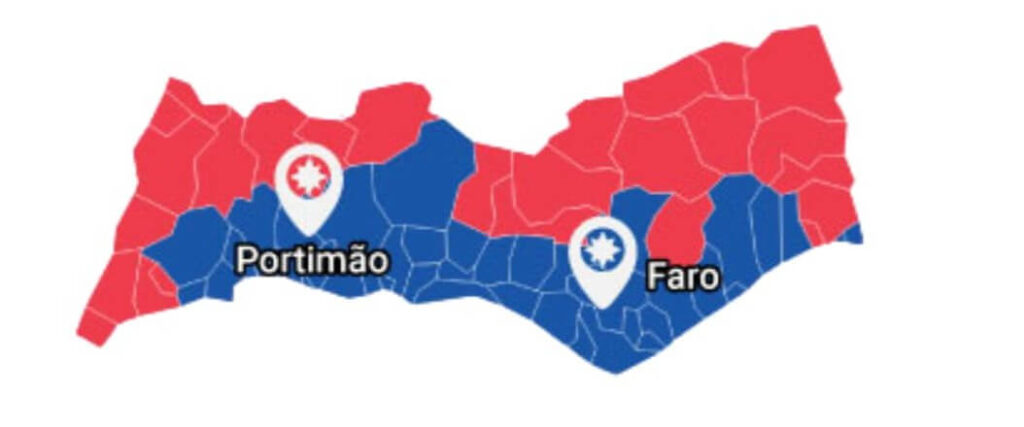
Red areas on the map correspond to designated low-density territories.

How it works

Eligible operations must contribute to the diversification of the Algarve’s productive base through one of the following:

  • Creation of micro and small enterprises with less than five years of activity;
  • Expansion of micro and small enterprises with five or more years of activity;
  • Modernisation projects that increase productivity, competitiveness or innovation capacity.

Projects must operate within the industrial sector or within one or more of the Algarve RIS3 strategic domains:

  • Blue Economy;
  • Terrestrial Endogenous Resources;
  • Cultural and Creative Industries;
  • Health, Wellbeing and Longevity;
  • Environmental Sustainability;
  • Digitalisation and ICT.

Projects should clearly demonstrate how the proposed investment contributes to the diversification of the Algarve economy and aligns with one or more Algarve RIS3 priorities.

Who Can Apply

Eligible beneficiaries are micro and small enterprises with a physical establishment in the Algarve (NUTS II) where the investment will take place.
Key access conditions include:

  • At least one paid job (in FTE terms) at the application date;
  • Organised accounting and a balanced economic-financial position;
  • Demonstrated financing sources for the operation;

Eligible Investment Expenses

Eligible costs, provided they are directly related to the operation, include: 

  • Tangible assets: machinery and equipment, IT equipment and required software; 
  • Intangible assets: patents, licences, technicalknow-howand software; 
  • Studies, diagnostics, audits, marketing plans, architecture and engineering services; 
  • Specialised external consultancy, including certified accountant / statutory auditor support for payment validation;
  • Product, process or service certification, and the design and registration of new brands;
  • Construction of buildings, remodelling and other works; 
  • Indirect costs: a flat rate of 7% of total eligible direct costs.

Need More Information?

If you are evaluating funding opportunities in Portugal and would like to understand whether this programme may be relevant for your organisation, Oporto Accounting can help clarify the framework and direct you to the appropriate application resources. For clarification or further information, reach out through our contact form or [email protected].
Foreign Investment in Portugal: Natixis Expansion Signals Growth

The opening of Natixis’ new competence centre in Lisbon is the latest example of growing foreign investment in Portugal. As international companies continue to expand their presence in the country, Portugal is strengthening its position as a strategic destination for business growth, talent, and innovation.

Part of Groupe BPCE, one of Europe’s largest banking groups, Natixis has expanded steadily since establishing operations in Porto in 2017. The company now employs around 3,300 people in the country and has publicly stated its ambition to reach 4,000 employees.

While the new Lisbon facility is an important milestone for the company, it also highlights a broader trend. Increasingly, multinational organisations are choosing Portugal for strategic operations that rely on specialised talent, technology and long-term business development.

This type of investment goes beyond traditional outsourcing models. Competence centres are typically established where companies see long-term value, access to qualified professionals, and a stable environment for growth.

For international investors, the latest expansion is another sign of the confidence that globally recognised organisations continue to place in the Portuguese market. Across sectors such as financial services, technology, and business services, Portugal is increasingly being viewed not only as a place to operate but as a place to invest and grow.

As more international groups strengthen their presence in the country, Portugal’s position as a credible destination for foreign direct investment continues to gain momentum.

What This Means for Businesses Considering Portugal

For businesses evaluating expansion opportunities in Europe, Natixis’ latest investment reinforces a trend that has become increasingly difficult to ignore. Portugal is no longer attracting foreign investors solely for operational efficiency; it is increasingly being selected for strategic, long-term business functions.

International groups are building specialised teams, establishing competence centres and expanding their presence across key sectors. Supported by a highly skilled workforce, strong international connectivity and access to the European market, the country continues to strengthen its position as a destination for foreign investment.

For organisations considering investing in Portugal, developments such as this provide further evidence of the confidence that globally recognised businesses place in the market and its long-term potential.

As international investment continues to grow, businesses entering the Portuguese market must also navigate local tax, accounting and compliance requirements. Oporto Accounting supports foreign entrepreneurs and companies establishing and growing their operations in Portugal.

Source:  Expresso

Portugal after Brexit: A smarter way to stay in the EU market

[et_pb_section fb_built=”1″ _builder_version=”4.16″ global_colors_info=”{}”][et_pb_row _builder_version=”4.16″ background_size=”initial” background_position=”top_left” background_repeat=”repeat” global_colors_info=”{}”][et_pb_column type=”4_4″ _builder_version=”4.16″ custom_padding=”|||” global_colors_info=”{}” custom_padding__hover=”|||”][et_pb_text _builder_version=”4.16″ background_size=”initial” background_position=”top_left” background_repeat=”repeat” global_colors_info=”{}”]

For UK businesses, Brexit didn’t just change trade rules, it changed the entire way of operating in Europe. Portugal has become a natural choice for companies looking to keep their EU access simple, cost-effective, and compliant.

Here’s why Portugal works, how to structure your business, and what tax advantages you can actually use.


Why Portugal?

Brexit created barriers, but it also created opportunities. Portugal offers UK businesses a way to maintain—or even improve—their EU market position.

 Full EU market access

No tariffs, no quotas, no customs delays. Portugal gives UK companies the same seamless trade with 500 million EU consumers that they had before Brexit.

 Lower taxes, real incentives

Portugal’s corporate tax rate is 21%, compared to the UK’s 25%. But the real advantage comes from incentives like SIFIDE, which can cut your R&D tax bill by up to 82.5%. For businesses investing in innovation, this isn’t just a benefit—it’s a game-changer.

 Fast setup, fewer headaches

Registering a company in Portugal takes 5 to 7 days, not weeks. Visas for entrepreneurs (D2) and remote workers (D7) make relocating teams straightforward. Compared to other EU countries, Portugal keeps bureaucracy to a minimum.


How to structure your business

The right legal structure depends on your goals. Here’s what UK businesses typically choose:

 Lda (Limited Liability Company)

  • Best for startups, SMEs, or businesses testing the Portuguese market.
  • Pros: Limited liability, €1 minimum capital, flexible management.
  • Cons: Requires a local fiscal representative if directors are non-resident.
  • Tax note: 21% corporate tax, but reduced rates may apply for SMEs in certain regions.

Branch Office

  • Best for established UK brands expanding into Portugal.
  • Pros: No separate legal entity (extension of the UK parent), easier profit repatriation.
  • Cons: Parent company has unlimited liability for debts.
  • Tax note: Profits taxed at 21% in Portugal; risk of double taxation if not structured correctly.

Holding Company

  • Best for international groups or businesses focused on tax optimization.
  • Pros: 95% exemption on dividends from EU subsidiaries, asset protection.
  • Cons: Higher setup costs, complex compliance.
  • Tax note: Ideal for businesses with multiple EU operations looking to streamline tax efficiency.

Tax incentives you can actually use

Portugal doesn’t just offer lower taxes, it offers smart tax planning opportunities for UK businesses.

SIFIDE (R&D Tax Credit)

  • Up to 82.5% tax credit on eligible R&D expenses (salaries, equipment, patents).
  • Example: A UK fintech company relocated its R&D team to Porto and claimed €250,000 in credits in its first year.

Non-Habitual Resident (NHR) Regime

  • 10-year tax exemption on foreign-sourced income (dividends, royalties, pensions) for qualifying expats.
  • 20% flat tax on Portuguese-sourced income (e.g., salaries).
  • Note: Check if this regime is still active in 2026, as rules have evolved.

PT-UK Tax Treaty

  • Reduces withholding taxes on dividends (0%-15%), interest (10%), and royalties (10%).
  • Avoids double taxation if structured correctly.

How to make the move

Setting up in Portugal is simpler than you think. Here’s the process:

  1. Choose your structure (Lda, branch, or holding).
  2. Register your company (we handle the paperwork, including NIPC and tax authority registration).
  3. Set up payroll and compliance (visas, social security, contracts).
  4. Optimize taxes (we’ll help you claim incentives like SIFIDE and structure transfer pricing).

Most businesses complete the process in under two weeks.

Why this works for UK businesses

Portugal isn’t just a Plan B after Brexit, it’s a smarter way to operate in the EU. Lower taxes, faster setup, and real incentives make it a practical choice for businesses that want to keep trading in Europe without the post-Brexit complications.

If you’re considering the move, we can help you structure it right.

For further clarification, you can reach out through our contact page.

[/et_pb_text][/et_pb_column][/et_pb_row][/et_pb_section]

Bilateral Fund Open Call #1 – EEA Grants 2021–2028 Portugal

Funding call under the EEA Grants Bilateral Fund supporting collaborative initiatives between Portugal, Norway, and/or Iceland in the fields of defence, security, and foreign policy, including cybersecurity, maritime security, hybrid threats, critical infrastructure, and European defence cooperation.

Programme details

  • Call: Call #1 –Defence, security, and foreign policy
  • Applications Open: 11 May 2026
  • Application Deadline: 15 September 2026 — 17:00 (UTC+1)
  • Total Funding Available: €500,000
  • Grant Amount: from €10,000 to €50,000 per initiative
  • Funding Rate: up to 90% of eligible costs
  • Co-financing Requirement: minimum 10%
  • Project Duration: minimum 6 months and maximum 24 months

About the funding

This open call was created under the Bilateral Fund Open of the EEA Financial Mechanism 2021–2028. It aims to strengthen bilateral relations between Portugal and the donor countries (Norway and Iceland) through joint initiatives with clear bilateral value and tangible outcomes. Supported activities should foster cooperation, knowledge exchange, and long-term partnerships in areas related to defence, security, and foreign policy.

How it works

Projects should contribute to one or more of the following themes:

  • Hybrid threats,
  • Critical infrastructure  protection;
  • Cybersecurity;
  • Maritime security
  • European defence cooperation;
  • Joint research and public engagement initiatives;

Eligible Activities

Activities may take place in Portugal and/or donor countries. Examples of supported activities include:

  • Workshops, seminars, and conferences
  • Technical cooperation and exchange of experts
  • Study visits and internships
  • Joint studies and publications
  • Public engagement campaigns
  • Training and intensive courses


Who Can Apply

Eligible applicants include legal entities established in Portugal, Norway or Iceland. Examples include:

  • Public entities
  • Private organisations
  • Commercial companies
  • Non-commercial organisations
  • NGOs
  • Research institutions
  • Civil society organisations
  • International organisations (under eligible partnership conditions)

Natural persons are not eligible.

Partnership Requirements

  • Portuguese applicants must include at least one partner from Norway or Iceland.
  • Norwegian or Icelandic applicants must include at least one Portuguese partner.
  • Partners must actively contribute to the initiative and cannot act solely as suppliers or consultants.

Eligible investment expenses

Eligible expenses under the EEA Grants Bilateral Fund include:

  • Be directly linked to project activities;
  • Be necessary and proportionate;
  • Comply with accounting and tax requirements;
  • Be recorded and verifiable.

Indirect costs, staff costs, and equipment purchases are generally not eligible.

Need More Information?

If you are evaluating funding opportunities in Portugal and would like to understand whether this programme may be relevant for your organisation, Oporto Accounting can help clarify the framework and direct you to the appropriate application resources. For clarification or further information, reach out through our contact form or i[email protected]

Portugal 2030 confirms new funding opportunities for companies between 2026 and 2027

[et_pb_section][et_pb_row][et_pb_column type=”4_4″][et_pb_text]

The updated Portugal 2030 calls calendar confirms a new cycle of funding opportunities for companies operating in Portugal, with more than 200 planned calls and approximately €3.16 billion in available funding expected between May 2026 and April 2027.

For companies preparing investment, innovation or expansion projects, the most relevant aspect of the updated calendar is not only the volume of funding available, but also the confirmation of several major incentive systems returning to the agenda, including STEP, SICE Inovação Produtiva, SIID I&D Empresarial and territorial incentive programmes for specific regions.

The updated calendar was published through the official Portugal 2030 portal.

STEP funding returns for digital and biotechnology projects

One of the main highlights of the updated Portugal 2030 calendar is the return of the STEP programme, focused on strategic technologies in digital innovation and biotechnology.

Two major calls are currently expected between August and November 2026:

Call Funding Expected period
STEP – Productive Innovation – Digital and Biotechnology €108M 31 August to 30 November 2026
STEP – Business R&D&I – Digital and Biotechnology €76M 31 August to 30 November 2026

These programmes are aimed at companies investing in critical technologies, particularly projects linked to digital transformation, deep tech and biotechnology.

The productive innovation call is expected to focus on investment and industrial capacity, while the R&D&I call is structured for innovation and co-promotion projects involving research and technological development.

SICE productive innovation remains one of the largest opportunities

The updated calendar also confirms the opening of the SICE – Productive Innovation – Low-Density Territories and Other Territories call.

With approximately €182.5 million in expected funding, this programme is one of the largest business-focused incentives currently scheduled under Portugal 2030.

The call is expected to run between:

29 May 2026 and 30 October 2026

The programme may be particularly relevant for companies planning:

– Expansion projects

– Industrial modernisation

– New production capacity

– Diversification of business activity

– Productive investment in low-density territories

SIID business R&D calls scheduled for 2026

The updated plan also includes two important calls under the SIID – Business R&D framework.

Call Funding Expected period
SIID – Business R&D – Demonstrator projects and co-promotion €12.5M 30 June to 30 December 2026
SIID – Business R&D – Individual and co-promotion operations €37M 30 September to 31 December 2026

These programmes are intended for companies developing new products, technologies or processes with a significant Research and Development component.

The demonstrator call is expected to focus on projects closer to practical validation and demonstration, while the broader SIID operations call covers more general business R&D activities.

Territorial incentives confirmed for Cávado and Ave

The Portugal 2030 calendar also confirms territorial incentive calls for the regions of Cávado and Ave.

The planned programmes include:

Territory Call Funding Expected period
Cávado Territorial-based incentive system €0.8M 4 May to 30 June 2026
Cávado Employment creation and microentrepreneurship support €1M 1 June to 31 July 2026
Ave Territorial-based incentive system €2.4M 4 May to 30 June 2026
Ave Employment creation and microentrepreneurship support €2M 1 June to 31 July 2026

These calls are aimed at supporting SME competitiveness, territorial investment and local economic development.

Why early preparation matters

The updated Portugal 2030 calendar confirms that the coming months will be particularly relevant for companies preparing:

– Investment projects

– Innovation and R&D operations

– Digital transformation initiatives

– Biotechnology projects

– Industrial modernisation

– Territorial expansion plans

Although the official notices may still be pending publication, early preparation is often essential.

Companies considering future applications may benefit from:

– Defining the investment structure early

– Confirming eligibility criteria

– Reviewing company size classification

– Assessing the most suitable programme

– Preparing financial and technical documentation in advance

In many cases, the quality of preparation can significantly influence the viability and competitiveness of the application.

Companies interested in upcoming Portugal 2030 opportunities should monitor the publication of the official notices and assess how planned investments align with the available programmes.

Further information about available incentives and funding programmes can be found on our dedicated grants page.

[/et_pb_text][/et_pb_column][/et_pb_row][/et_pb_section]

Tax authorities clarify IRS benefit for employee share plans in Portugal

[et_pb_section fb_built=”1″ _builder_version=”4.16″ global_colors_info=”{}”][et_pb_row _builder_version=”4.16″ background_size=”initial” background_position=”top_left” background_repeat=”repeat” global_colors_info=”{}” custom_padding=”|||2px||”][et_pb_column type=”4_4″ _builder_version=”4.16″ custom_padding=”|||” global_colors_info=”{}” custom_padding__hover=”|||”][et_pb_text _builder_version=”4.16″ background_size=”initial” background_position=”top_left” background_repeat=”repeat” global_colors_info=”{}”]

The Portuguese Tax Authority has acknowledged that certain employee share plans may qualify for favourable IRS tax treatment, although it has also made clear that access to the benefit depends on strict documentary evidence and compliance with the legal conditions applicable to each scheme.

The position is particularly relevant for companies using equity-based compensation to attract or retain talent in Portugal, especially international groups that grant shares, options or incentive plans to local employees.

For businesses operating in Portugal, the topic highlights an increasingly important point: incentive structures may create opportunities, but only when they are correctly designed, documented and aligned with Portuguese tax rules.


Why employee share plans are becoming more relevant

Many companies, particularly in technology, scale-up and international business environments, use employee share plans as part of their remuneration strategy.

These plans may include:

  • Share awards
  • Stock options
  • Restricted stock units (RSUs)
  • Performance-based equity incentives
  • Group participation plans

In practice, these tools can help companies align long-term employee incentives with business growth while preserving cash flow when compared with purely salary-based compensation.

As more international employers expand into Portugal, these arrangements are becoming increasingly common.


The importance of tax qualification in Portugal

Although employee share plans are widely used internationally, their Portuguese tax treatment is not always straightforward.

According to the Tax Authority’s recent position, access to favourable IRS treatment may be possible in some cases, but companies and employees must demonstrate that the plan effectively meets the legal criteria established under Portuguese law.

This means that tax outcomes may depend on factors such as:

  • The legal structure of the plan
  • Vesting and exercise conditions
  • Whether the benefit qualifies under the relevant regime
  • The timing of taxation
  • Supporting documentation available
  • Relationship between employer, group company and employee

Without proper analysis, assumptions based on foreign practice may create unexpected tax exposure in Portugal.


Documentation is no longer a secondary issue

One of the most important signals from the recent clarification is the emphasis on proof.

The Tax Authority reportedly accepts that beneficial treatment may apply, but requires robust evidence supporting the structure, conditions and operation of the plan.

For companies, this reinforces the need to maintain clear records, including:

  • Plan rules and legal terms
  • Board or shareholder approvals
  • Grant notices and employee acceptances
  • Vesting schedules
  • Valuation methodology where relevant
  • Payroll and reporting treatment
  • Cross-border documentation within the group

In practice, a technically valid plan may still create difficulties if documentation is incomplete or inconsistent.


What this means for international groups

Many Portuguese employees participate in plans created by foreign parent companies.

Where this happens, local entities often assume that the global structure automatically determines the Portuguese tax result. However, Portuguese compliance obligations may still arise at payroll, withholding, reporting or employee level.

This is particularly relevant where:

  • Employees relocate to or from Portugal
  • Vesting periods span multiple countries
  • Shares are granted by a parent company abroad
  • Costs are recharged locally
  • Multiple tax years are involved

Cross-border plans frequently require local review even when centrally managed.


Equity incentives require coordination between tax, payroll and HR

Employee share plans sit at the intersection of several functions.

To operate effectively in Portugal, companies often need coordination between:

  • Tax advisers
  • Payroll teams
  • HR and compensation teams
  • Finance departments
  • Group legal teams

Where these areas operate separately, reporting gaps and inconsistent treatment become more likely.


A more mature approach to incentives

The broader message is clear: equity-based remuneration can be valuable, but it should not be treated as an informal add-on to compensation policy.

As Portuguese rules continue to interact with increasingly international employment structures, companies benefit from reviewing how their plans are documented, taxed and reported locally.

Businesses operating in Portugal that use employee share plans should ensure the structure is assessed in advance, particularly where cross-border elements or payroll implications exist.

For further clarification on tax, payroll or reporting obligations in Portugal, you can reach out through our contact page.

[/et_pb_text][/et_pb_column][/et_pb_row][/et_pb_section]

Tax deadlines in Portugal for 2026 for Freelancers and Companies

[et_pb_section fb_built=”1″ _builder_version=”4.16″ global_colors_info=”{}”][et_pb_row _builder_version=”4.16″ background_size=”initial” background_position=”top_left” background_repeat=”repeat” global_colors_info=”{}”][et_pb_column type=”4_4″ _builder_version=”4.16″ custom_padding=”|||” global_colors_info=”{}” custom_padding__hover=”|||”][et_pb_text _builder_version=”4.16″ background_size=”initial” background_position=”top_left” background_repeat=”repeat” global_colors_info=”{}”]

Understanding tax deadlines in Portugal is essential for both self-employed individuals and companies operating in the country. Missing reporting or payment deadlines may result in penalties, interest charges and unnecessary administrative complications.

For international entrepreneurs, freelancers and companies with local operations, structured tax planning is particularly important to ensure that Portuguese obligations remain aligned with wider business or personal financial decisions.

Below is an overview of the main tax deadlines in Portugal for 2026 for both freelancers and companies.


Tax Deadlines for Freelancers in Portugal (IRS)


Individuals registered as self-employed in Portugal may need to submit an annual IRS tax return, depending on their tax residency status and income received during the year.


Annual IRS Filing Period


The standard IRS filing period usually runs from:

1 April to 30 June 2026

During this period, individuals may need to declare:

  • Self-employment income
  • Employment income
  • Foreign income
  • Investment income
  • Other taxable earnings


Why Early Preparation Matters

Preparing in advance allows time to:

  • Confirm income records
  • Review deductible expenses
  • Assess foreign income reporting obligations
  • Correct missing invoices or documentation
  • Avoid delays close to the deadline

This is particularly relevant for individuals receiving income from abroad or working across different jurisdictions.


Tax Deadlines for Companies in Portugal (Corporate Tax)


Companies registered in Portugal are generally required to comply with annual corporate tax obligations, as well as recurring reporting requirements during the year.


Modelo 22 – Corporate Income Tax Return

The Modelo 22 return is the annual corporate income tax declaration and is usually submitted by:

31 May 2026

(Depending on the company’s accounting period, specific deadlines may vary.)


IES – Annual Accounting and Tax Filing

The IES (Informação Empresarial Simplificada) combines accounting, tax and statistical reporting obligations and is usually due by:

15 July 2026

Advance Corporate Tax Payments

Some companies may also be required to make advance tax payments during the year, commonly scheduled in instalments.

These obligations depend on the company’s size, previous tax position and specific circumstances.


Why Tax Deadlines Matter


Meeting tax deadlines is not only about avoiding penalties. Timely compliance helps ensure:

  • Better financial planning
  • Accurate reporting
  • Reduced risk of corrections or inspections
  • Stronger internal organisation
  • Greater visibility over tax exposure

For growing businesses or international structures, tax obligations should form part of wider financial management.


International Structures Require Additional Attention


Freelancers and companies with international activity may face additional considerations, such as:

  • Foreign income reporting
  • Double taxation rules
  • Cross-border transactions
  • Group reporting alignment
  • Tax residency analysis

In these cases, local Portuguese deadlines must remain coordinated with obligations in other jurisdictions.


A structured approach supports compliance


Whether operating as a freelancer or through a company, tax obligations in Portugal benefit from early preparation and structured follow-up throughout the year.

Accounting records, supporting documentation and timely review of obligations all contribute to smoother reporting and reduced administrative risk.


Need support with tax deadlines in Portugal?


If you are preparing for upcoming IRS or corporate tax obligations in Portugal, structured support can help ensure that deadlines are met accurately and without unnecessary pressure.

Whether you operate as a freelancer, manage a growing company or coordinate obligations within an international structure, our team can help clarify requirements and support your compliance process.

Reach out to us to discuss your tax obligations in Portugal.

[/et_pb_text][/et_pb_column][/et_pb_row][/et_pb_section]

Digitalisation and automation in accounting for international businesses

Digitalisation and automation are reshaping the accounting landscape, offering international businesses unprecedented opportunities to streamline operations, reduce costs, and improve accuracy.

For companies operating in Portugal, these technologies are not just a trend; they are becoming a necessity to stay competitive and compliant in a rapidly evolving financial environment.


The rise of digitalisation and automation in accounting

Digitalisation involves transitioning from traditional paper-based processes to digital systems, while automation uses technology to perform repetitive tasks without human intervention. Together, these innovations are transforming how businesses manage their financial operations.

Key areas where digitalisation and automation are making an impact include:

  • Data Entry and Processing: Automated tools can extract and process data from invoices, receipts, and bank statements, reducing manual errors and saving time.
  • Financial Reporting: Digital platforms generate real-time financial reports, providing businesses with up-to-date insights for decision-making.
  • Tax Compliance: Automation ensures that tax calculations and filings are accurate and submitted on time, minimizing the risk of penalties.
  • Payroll Management: Automated payroll systems handle salary calculations, tax deductions, and compliance with local labor laws, ensuring employees are paid correctly and on time.

For international businesses in Portugal, these technologies are particularly valuable, as they help navigate the complexities of local regulations and reporting requirements.


Benefits for international businesses

Adopting digitalisation and automation in accounting offers several advantages for international businesses:

  1. Increased Efficiency: Automation reduces the time spent on manual tasks, allowing finance teams to focus on strategic activities like financial planning and analysis.
  2. Cost Savings: By minimizing errors and improving productivity, businesses can lower operational costs and avoid fines related to compliance issues.
  3. Improved Accuracy: Digital tools reduce human errors in data entry and calculations, leading to more reliable financial records.
  4. Enhanced Compliance: Automated systems ensure that businesses adhere to local and international regulations, including Portugal’s tax and reporting requirements.
  5. Scalability: Digital accounting systems can easily scale with business growth, accommodating increased transaction volumes and complex financial operations.

Key considerations for implementation in Portugal

While the benefits of digitalisation and automation are clear, international businesses must consider several factors when implementing these technologies in Portugal:

  1. Regulatory Compliance: Ensure that the chosen digital tools comply with Portuguese accounting and tax laws. For example, invoicing software must meet the requirements of the Portuguese Tax Authority (Autoridade Tributária).
  2. Data Security: Protecting financial data is critical. Businesses should select platforms with robust security measures, such as encryption and multi-factor authentication, to safeguard sensitive information.
  3. Integration with Existing Systems: Digital tools should seamlessly integrate with existing ERP or accounting software to avoid disruptions in financial processes.
  4. Training and Support: Employees may require training to effectively use new digital tools. Providing ongoing support ensures a smooth transition and maximizes the benefits of automation.
  5. Choosing the Right Tools: Not all digital accounting solutions are created equal. Businesses should evaluate their specific needs—such as multi-currency support, real-time reporting, or industry-specific features, before selecting a platform.

The future of accounting in Portugal

The future of accounting in Portugal is undeniably digital. As technology continues to advance, businesses that embrace digitalisation and automation will gain a competitive edge. The Portuguese government is also encouraging this shift, with initiatives like the Portugal Digital program promoting the adoption of digital tools across industries.

For international businesses, staying ahead of these trends is essential. By leveraging digitalisation and automation, companies can not only improve their financial operations but also position themselves for long-term success in Portugal’s dynamic business environment.


Conclusion

Digitalisation and automation are transforming accounting for international businesses, offering efficiency, cost savings, and improved compliance. In Portugal, where regulatory requirements can be complex, these technologies provide a powerful tool for navigating financial challenges and seizing growth opportunities.

For businesses looking to adopt digital accounting solutions, the key is to start with a clear strategy, choose the right tools, and ensure compliance with local regulations. By doing so, companies can unlock the full potential of digitalisation and automation, driving success in Portugal and beyond.

For further guidance on digital accounting solutions or compliance in Portugal, feel free to reach out through our contact page.

Oporto Accounting

Oporto Accounting

Typically replies within an hour

I will be back soon

Contact Us

Formulário de Contato EN
Oporto Accounting
Hey there 👋
How can I help you?
Start Chat with:
chat